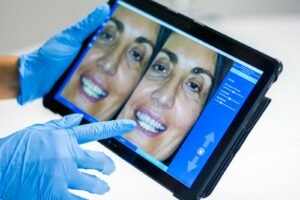
If the idea of flying to Costa Rica for dental treatment feels like a big step, you are not alone.
Dental tourism is no longer an unusual decision for American patients. CareQuest Institute reported in 2026 that about 4% of U.S. adults — nearly 9.6 million people — say they have traveled outside the United States for dental care at some point. More than half identified lower treatment costs as the main reason. CareQuest Institute: Dental Tourism among U.S. Adults.
Costa Rica is one of the countries many patients consider. Industry figures cited by Costa Rican media, based on Central Bank data compiled by the Costa Rican Chamber of Health, estimate that roughly 70,000 international medical patients visit the country each year. Dentistry represents about 42% of the demand for international medical services, and most of these patients come from the United States and Canada. The Tico Times: Costa Rica Medical Tourism.
For patients living with missing teeth, failing teeth, or removable dentures, that matters for one simple reason: you are not considering an unknown path.
SmileBridge Costa Rica helps international patients understand that path, connect with selected dental implant clinics, and navigate the non-clinical parts of the journey with greater clarity and support.
Why Do Americans Travel Abroad for Dental Care?
The reason often begins with cost.
Major restorative dentistry — especially full-mouth dental implants, All-on-4, All-on-6, or other full-arch treatments — can represent a substantial financial commitment in the United States or Canada.
CareQuest Institute found that 58% of U.S. adults who had traveled abroad for dental care identified lower treatment costs as their primary reason. Lack of dental insurance and limited benefits were additional factors. CareQuest Institute: Nearly 9.6 Million Adults Have Traveled for Dental Treatment.
But price should be the beginning of the research, not the end of it.
A responsible international dental decision should also consider:
- the qualifications and experience of the treating team;
- clinical diagnosis and imaging;
- implant systems and prosthetic materials;
- treatment stages and healing time;
- how complications are managed;
- follow-up after the patient returns home;
- transportation, accommodations, and communication.
Why Costa Rica?
Costa Rica combines several qualities that reduce the friction of international healthcare travel.
For many North American patients, the country is geographically close, highly connected by air, familiar with international tourism, and experienced in serving visitors from the United States and Canada.
The decision does not have to feel like traveling to the other side of the world.
If you are already evaluating Costa Rica specifically for implant treatment, see our commercial guide to why Costa Rica is considered for dental implants and our main page on dental implant treatment in Costa Rica. Those pages focus on treatment options and next steps, while this guide focuses on the destination and the international patient journey.
Costa Rica Is Easy to Reach From North America
Juan Santamaría International Airport, the primary international airport serving the San José metropolitan area, has nonstop service to major North American hubs.
The airport currently lists direct service to cities including:
- Miami;
- Dallas;
- Houston;
- Orlando;
- New York;
- Newark;
- Los Angeles;
- Atlanta;
- Charlotte;
- Chicago;
- San Francisco;
- Toronto;
- Montreal.
Airlines serving these routes include American, United, JetBlue, Southwest, Delta, Alaska, Air Canada, Air Transat, Volaris and others. Juan Santamaría International Airport: Connectivity.
Depending on the departure city, many U.S. travelers can reach Costa Rica in roughly three to six hours on a nonstop flight.
That proximity can be especially important for older adults, denture wearers, or patients planning multi-stage implant treatment who do not want a long-haul intercontinental journey.
U.S. Tourists Usually Do Not Need a Visa
For U.S. citizens traveling as tourists, the entry process is relatively straightforward.
The U.S. Department of State currently states that a tourist visa is not required for stays of less than 180 days. Travelers need a valid passport and proof of onward or return travel, and the final length of stay granted is determined by Costa Rican immigration authorities. U.S. Department of State: Costa Rica Travel Information.
For a patient already anxious about dental treatment, avoiding a complex visa process removes one more source of uncertainty.
Little Time-Zone Disruption
Costa Rica operates on Central Standard Time, UTC-6, throughout the year.
For most U.S. and Canadian patients, that means little or no significant jet lag compared with destinations in Europe or Asia.
The U.S. Department of State notes that Costa Rica is generally one or two hours behind Washington, D.C., depending on daylight saving time.
For a patient recovering from surgery, keeping a familiar sleep and meal rhythm can make the journey feel much easier.
What About Language?
Spanish is Costa Rica’s official language, but English is widely spoken in tourism areas and is commonly used by many private healthcare providers serving international patients.
The Costa Rican Tourism Board specifically notes that English is widely spoken in many tourist areas. Visit Costa Rica: Frequently Asked Questions.
You should not assume that every person you meet will speak English. But you also do not need to be fluent in Spanish to navigate a well-planned dental journey.
SmileBridge helps provide an additional layer of clarity by coordinating with selected providers and helping patients understand the non-clinical parts of the process.
Costa Rica Has an Established Private Healthcare Ecosystem
Dental tourism in Costa Rica exists within a broader private healthcare environment.
The country has private hospitals, specialist medical centers, diagnostic services, dental clinics, pharmacies, laboratories, and other healthcare resources concentrated particularly in the Greater San José metropolitan area.
One example is Hospital CIMA San José, which holds Joint Commission International accreditation and maintains services specifically for international patients. Hospital CIMA: Accreditations.
Costa Rica also has a significant medical-device and life-sciences industry. PROCOMER reported that medical-device exports reached approximately US$5.382 billion in the first half of 2026 and represented 46% of the country’s goods exports during that period. PROCOMER: Costa Rica Medical Device Industry.
This does not prove the quality of any individual dental clinic. Patients still need to evaluate providers carefully. But it does show that Costa Rica participates in a much broader ecosystem of healthcare, medical technology, and international patient services.
Dentistry Remains a Major Part of Costa Rica’s Medical Tourism Market
Recent reporting in Costa Rica indicates that dental treatment continues to represent a large share of international healthcare demand.
Delfino reported in August 2026 that dentistry accounts for approximately 42% of the demand for international medical services in Costa Rica and that more than 80% of medical tourists come from the United States, with another significant share from Canada. Delfino: Costa Rica and International Dental Tourism.
For an American or Canadian patient, that means the international-patient experience is not a new concept for the local private sector.
You Are Traveling for Dental Care — But Not Into the Unknown
For first-time medical travelers, the biggest barrier is often psychological.
The thought process may sound like this:
“I know I need treatment.”
“The cost at home is difficult.”
“Costa Rica looks interesting.”
“But am I really going to another country for dental implants?”
That reaction is normal.
But millions of Americans have already traveled internationally for dental treatment, and thousands of international healthcare patients travel to Costa Rica each year.
The more useful question becomes:
“How do I evaluate my options carefully and make this journey in a clear, organized way?”
Why San José Matters
For many dental patients, the San José metropolitan area functions as the practical base of the trip.
The airport is nearby, and the metropolitan area offers:
- private hospitals;
- dental specialists;
- pharmacies;
- diagnostic services;
- hotels;
- restaurants;
- supermarkets;
- private transportation;
- other services useful during treatment and recovery.
Read our guide to why San José can be a practical base for dental implant treatment.
Can You Enjoy Costa Rica During a Dental Trip?
Potentially, yes — but treatment and recovery should come first.
Costa Rica is internationally known for nature, biodiversity, national parks, wildlife, volcanoes, beaches, and a mature tourism industry.
Visit Costa Rica notes that the country has extensive tourism infrastructure and domestic connections that make many regions accessible. Visit Costa Rica: Airlines and Domestic Connectivity.
Some patients extend their trip before treatment or after the dental team determines that travel and activities are appropriate.
Companions may also have opportunities to explore while the patient rests.
The important distinction is:
Your dental trip can include Costa Rica. Your dental treatment should not be treated like a vacation activity.
What Should You Evaluate Before Choosing Costa Rica?
Consider:
- your clinical diagnosis;
- the clinic and treating professionals;
- treatment cost and what is included;
- how many trips are required;
- how long you should stay;
- your medical history;
- postoperative support;
- follow-up after returning home;
- transportation and accommodation;
- whether you are traveling alone or with a companion.
If safety is one of your biggest concerns, see our guide: Is Costa Rica Safe for Dental Tourism?.
How SmileBridge Fits Into the Journey
SmileBridge organizes this work through our Dental Destination Management Company (DDMC) model, which combines local destination expertise, a curated clinic network and international-patient coordination around the treatment plan created by the clinic.
SmileBridge Costa Rica is not a dental clinic and does not diagnose or prescribe treatment.
We help international patients:
- understand how dental treatment in Costa Rica works;
- connect with selected dental implant clinics;
- organize preliminary consultations and information exchange;
- prepare questions before making a decision;
- coordinate appointments;
- plan accommodations and transportation;
- navigate the non-clinical aspects of the journey with a familiar point of contact.
The dental clinic remains responsible for examination, diagnosis, candidacy, treatment planning, surgery, prosthetic treatment, medications, and clinical follow-up.
Frequently Asked Questions About Dental Tourism in Costa Rica
Do many Americans travel abroad for dental treatment?
Yes. CareQuest Institute reported in 2026 that nearly 9.6 million U.S. adults say they have traveled outside the United States for dental care at some point.
Do international patients travel to Costa Rica for dentistry?
Yes. Industry figures cited in Costa Rican media estimate about 70,000 international medical patients per year, with dentistry representing roughly 42% of international medical-service demand.
Do U.S. citizens need a visa to travel to Costa Rica?
For ordinary tourist visits, U.S. citizens generally do not need a visa for stays of less than 180 days. A valid passport and proof of return or onward travel are required, and immigration authorities determine the authorized stay.
Are there direct flights from the United States to Costa Rica?
Yes. Juan Santamaría International Airport has nonstop service to multiple U.S. hubs, including Miami, Dallas, Houston, Orlando, New York, Newark and Los Angeles.
Is English spoken in Costa Rica?
Spanish is the official language, but English is widely spoken in many tourism areas and by many private healthcare providers serving international patients.
Is dental treatment in Costa Rica only about lower prices?
No. Cost is often an important reason patients begin researching Costa Rica, but clinic selection, clinical quality, treatment planning, materials, follow-up, travel logistics and patient support also matter.
Can I travel around Costa Rica during dental treatment?
Possibly, depending on the procedure and your recovery. Patients should follow the treating dental team’s guidance before adding tours, long drives, flights or strenuous activities.
How can SmileBridge help with dental tourism in Costa Rica?
SmileBridge Costa Rica helps international patients understand the journey, connect with selected dental implant clinics, organize consultations, and coordinate non-clinical travel and logistics. Clinical decisions remain with licensed dental professionals.
Related SmileBridge Guides
- Why San José Is a Practical Base for Dental Implant Treatment
- First-Time Patient Guide to Dental Travel in Costa Rica
- Is Costa Rica Safe for Dental Tourism?
- Dental Implant Cost in Costa Rica
Travel note: Entry requirements, airline routes and travel advisories can change. Patients should verify current requirements before booking.
Medical note: This article is for general educational purposes and does not replace clinical examination, diagnosis, or individualized treatment recommendations from a licensed dental professional.