The dental implant process usually takes months rather than days because the jawbone needs time to heal around the implant. Some steps can happen quickly, but biological healing cannot be rushed.
For a straightforward single-tooth case, the process may involve implant placement, several months of healing, and then the final crown. For full-arch treatment, extractions, temporary teeth, implant healing, and delivery of the final prosthesis can create a more complex timeline. Bone grafting can add additional months.
This matters even more for international patients. If you are considering dental implants in Costa Rica, you need to understand not only how long the surgery takes, but also how many treatment stages, trips, and follow-up appointments may be required. SmileBridge Costa Rica helps patients organize that journey around the clinical plan created by the treating dental team.
How Long Does the Dental Implant Process Take?
There is no single timeline for every patient.
Cleveland Clinic explains that the jawbone may take approximately three to nine months to fuse around a dental implant, a process called osseointegration. Cleveland Clinic: Dental Implants.
Mayo Clinic similarly explains that the entire dental implant process can take many months because much of the timeline is devoted to healing and bone growth. Mayo Clinic: Dental Implant Surgery.
Your total timeline may be shorter or longer depending on:
- whether a tooth must be extracted;
- whether the implant can be placed immediately;
- whether bone grafting is needed;
- how quickly your bone heals;
- whether temporary teeth are used;
- whether you are replacing one tooth or a full arch;
- medical and oral health factors;
- the final prosthetic design.
What Are the Main Stages of Dental Implant Treatment?
1. Consultation and diagnostic imaging
The process begins with evaluation.
Your dental team may review:
- medical history;
- medications;
- oral health;
- remaining teeth;
- gum condition;
- jawbone volume;
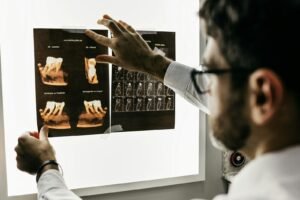
- X-rays or cone-beam CT scans;
- your treatment goals.
For international patients, recent imaging and dental records may allow a clinic to provide a preliminary opinion before travel, although final diagnosis may still require an in-person examination.
2. Tooth extraction, if needed
If a damaged or failing tooth needs to be removed, extraction may happen before implant placement or during the same treatment phase.
Whether the implant can be placed immediately depends on infection, bone, implant stability, anatomy, and the clinical plan.
3. Bone grafting, if needed
If there is not enough bone to support the planned implant, the dental team may recommend grafting.
Minor grafting can sometimes happen during implant placement. More extensive grafting may need several months of healing before the implant can be placed.
See Bone Grafting for Dental Implants for a detailed explanation.
4. Implant placement
During surgery, the implant is placed into the jawbone.
The surgical appointment itself may be relatively short for a single implant, but that does not mean the entire treatment is finished. The implant now needs time to become stable through osseointegration.
5. Osseointegration
Osseointegration is the biological process in which the jawbone heals around and bonds with the implant surface.
This stage is one of the main reasons implant treatment takes months.
Cleveland Clinic currently gives a general healing range of approximately three to nine months. Individual healing varies.
6. Abutment and restorative phase
After sufficient healing, the dentist may attach an abutment and begin the final restorative phase.
Mayo Clinic notes that gum tissue may need additional healing after abutment placement before the final artificial tooth is attached.
7. Final crown, bridge, or full-arch prosthesis
The final restoration is designed, fitted, adjusted, and attached once the dental team believes the implants and surrounding tissues are ready.
How Long Does a Single Dental Implant Take?
A straightforward single implant case may still take several months from beginning to final crown.
A simplified sequence might look like:
- consultation and imaging;
- implant placement;
- three to nine months of osseointegration;
- abutment and restorative records;
- final crown.
If extraction or bone grafting is needed first, the process can be longer.
How Long Does Full-Arch Implant Treatment Take?
Full-arch treatment can involve more steps because several implants and a complete prosthesis are being planned together.
A typical journey may include:
- diagnostic planning;
- extraction of failing teeth when necessary;
- implant placement;
- temporary fixed or removable teeth;
- healing and osseointegration;
- final records and try-ins;
- delivery of the final prosthesis.
Some patients may receive temporary fixed teeth shortly after implant placement when clinical conditions allow. But these are usually not the final teeth.
See Full-Arch Dental Implants and All-on-4 Dental Implants for more detail.
What Does “Teeth in a Day” Really Mean?
“Teeth in a day” can be misunderstood.
In selected cases, extractions, implants, and temporary fixed teeth may be completed within a short treatment window.
But the implants still need months to heal and integrate with the jawbone. The final restoration is usually completed later after healing.
So the phrase generally describes the temporary-tooth phase, not the complete biological and prosthetic process.
Can the Dental Implant Process Be Faster?
Some steps can sometimes be combined.
Examples include:
- immediate implant placement after extraction;
- minor grafting at the time of implant placement;
- immediate temporary teeth in selected cases.
But faster treatment is not automatically better treatment.
The dental team needs to determine whether immediate approaches are clinically appropriate based on bone, infection, implant stability, bite forces, medical history, and other factors.
What Makes Dental Implant Treatment Take Longer?
Bone grafting
More extensive grafts may need several months to heal before implants can be placed.
Sinus augmentation
Upper-jaw cases may require additional procedures when there is insufficient bone beneath the sinus.
Complex extractions
Infection, damaged bone, or multiple extractions can affect the treatment sequence.
Healing problems
Smoking, uncontrolled medical conditions, poor oral hygiene, and other factors can affect healing.
Implant integration
If the dental team is not satisfied with implant stability or healing, additional time may be recommended before loading or final restoration.
Complex full-mouth rehabilitation
Full-mouth treatment involves more prosthetic planning, bite management, laboratory work, and coordination than a single implant.
How Long Does Recovery From Implant Surgery Take?
Initial soft-tissue recovery is much shorter than complete implant integration.
Cleveland Clinic notes that the first stage of recovery may take about a week, while osseointegration takes much longer.
Patients may experience:
- swelling;
- tenderness;
- minor bleeding;
- bruising;
- temporary dietary restrictions.
Your treating team should provide specific postoperative instructions and tell you when to seek help.
When Can You Eat Normally After Dental Implants?
This depends on the procedure.
After implant placement, particularly in immediate-load full-arch cases, patients may need to follow a soft or modified diet during healing to reduce excessive force on the implants.
The treating dentist determines when the diet can progress.
Do not assume that having temporary fixed teeth means the implants are already fully healed.
How Many Trips to Costa Rica Are Needed for Dental Implants?
There is no universal answer.
Some simpler cases may be completed in one trip when the clinical plan allows. Complex implant or full-arch treatment often involves at least two major treatment stages separated by healing.
For example:
Trip 1 may involve evaluation, extractions, implant placement, and temporary teeth.
Healing period occurs after the patient returns home.
Trip 2 may involve final records, try-ins, adjustments, and delivery of the definitive restoration.
Bone grafting or other procedures can add another stage.
This is why international treatment should be planned around the dentist’s clinical timeline rather than around airfare availability alone.
How Long Should You Stay in Costa Rica After Implant Surgery?
The recommended stay depends on the treatment.
A patient receiving one implant may have a different schedule from someone receiving multiple extractions and a full-arch restoration.
The clinic should tell you:
- how many postoperative checks are needed;
- when temporary teeth will be adjusted;
- when you are cleared to fly;
- what symptoms require evaluation before departure;
- what follow-up will occur after you return home.
SmileBridge uses the clinic’s recommendations to help coordinate the non-clinical travel plan.
What Happens Between the First and Second Trip?
The healing period is not simply “waiting.”
During that time, patients may need to:
- follow hygiene instructions;
- follow dietary restrictions;
- avoid smoking;
- take medications as directed;
- attend local or remote follow-up when recommended;
- report pain, swelling, mobility, or other concerns;
- allow tissues and bone to heal before the final restoration.
The treating clinic should explain how communication works during this period.
Does Age Make the Dental Implant Process Longer?
Age by itself does not determine the timeline.
Healing is influenced by individual health, bone, medications, smoking, diabetes control, oral hygiene, and the complexity of treatment.
Many older adults may be appropriate candidates for implant treatment, but the timeline should be individualized rather than rushed.
Why Timeline Matters for Denture Wearers
For someone who has worn dentures for years, discovering fixed implant-supported teeth can create a strong desire to move quickly.
That is understandable.
But the goal is not simply to “get teeth fast.” The goal is to complete treatment in a sequence that supports healing, implant stability, prosthetic fit, hygiene, and long-term function.
A temporary solution may improve day-to-day comfort during treatment, but it should not be confused with the final biological outcome.
How Does the Timeline Affect Cost?
More treatment stages can mean:
- additional appointments;
- additional travel;
- more hotel nights;
- temporary restorations;
- additional procedures;
- more follow-up.
That is why patients should ask about the complete treatment sequence when comparing estimates.
See Dental Implant Cost in Costa Rica for a detailed guide to comparing quotes and travel costs.
What Should You Ask a Costa Rica Implant Clinic About Timing?
Before booking travel, ask:
- What procedures are expected on the first trip?
- Will any teeth need to be extracted?
- Do you expect bone grafting?
- Will I receive temporary fixed or removable teeth?
- How long do you expect the implants to heal?
- When should I return for the final restoration?
- How long should each trip be?
- What happens if healing takes longer than expected?
- How is follow-up managed between trips?
- What symptoms should make me contact the clinic?
How SmileBridge Helps Coordinate the Dental Implant Timeline
SmileBridge Costa Rica does not determine the medical timeline. The treating dental team does.
Our role is to help patients translate that clinical timeline into a manageable international journey.
SmileBridge can help:
- organize preliminary records and consultations;
- connect you with selected dental implant clinics in Costa Rica;
- clarify the expected stages of treatment;
- coordinate appointments around the clinic’s plan;
- help plan accommodation and transportation;
- support communication around the non-clinical parts of the journey.
If you are beginning your research, our complete guide to dental implants explains the treatment options in broader context.
Frequently Asked Questions About the Dental Implant Timeline
How long does the complete dental implant process take?
Many implant treatments take several months from initial evaluation to final restoration. Cleveland Clinic notes that osseointegration alone can take approximately three to nine months. Additional procedures such as bone grafting can extend the timeline.
Can a dental implant be completed in one day?
Implants and temporary teeth can sometimes be placed in a short treatment window, but biological healing still takes months. The final restoration is often completed later.
How long after extraction can an implant be placed?
Sometimes an implant can be placed immediately after extraction. In other situations, the site needs time to heal first. Infection, bone, implant stability, and anatomy influence the decision.
How long after a bone graft can an implant be placed?
The timeline varies. More substantial grafts may require several months of healing, while minor grafting can sometimes be performed during implant placement.
How long does an implant take to fuse with bone?
Cleveland Clinic gives a general range of approximately three to nine months for osseointegration, although individual healing varies.
How many trips to Costa Rica are needed for full-mouth implants?
Complex full-arch treatment often involves at least two major stages separated by healing, but some patients require additional visits. The clinic should provide an individualized timeline before travel is booked.
Can older patients heal normally after dental implants?
Many older adults can undergo implant treatment successfully. Age alone does not determine healing; overall health, bone, medications, smoking, diabetes control, hygiene, and treatment complexity all matter.
How can SmileBridge help me plan the timing of dental implants in Costa Rica?
SmileBridge Costa Rica helps international patients organize consultations, understand the clinic’s treatment sequence, and coordinate appointments, accommodation, and transportation around that clinical timeline. The treating dental professionals determine the medical schedule.
Related SmileBridge Guides
- Complete Guide to Dental Implants
- Bone Grafting for Dental Implants
- All-on-4 Dental Implants
- Dental Implant Cost in Costa Rica
Medical note: This article is for general educational purposes and does not replace examination, imaging, diagnosis, or individualized treatment recommendations from a licensed dental professional.